AI-POWERED RESEARCH INTELLIGENCE

Finding therapies hidden in 1,516 Parkinson’s papers.

Neurocompute scores biomedical literature, surfaces overlooked patterns, and turns Parkinson’s research into a living discovery terminal.

1,516Papers indexed
984Papers AI scored
998Ranked papers
0.7%Coverage
LIVE RESEARCH INTELLIGENCE
↑ Narrative velocity rising ↑ New papers ingested ↑ Cross-paper convergence detected ↑ AI score dials updating ↑ Research blind spots surfacing
TOP SIGNALS TODAY

Ranked discovery teasers

View all discoveries →
RESEARCH TERMINAL

All ranked Parkinson’s papers

1516 results
B
AI72.0
Base78.6
Rank74.3
AI Summary

In 6‑OHDA SH‑SY5Y cells and unilateral 6‑OHDA rats, Antrodia cinnamomea conjugated to citrate‑stabilized silver nanoparticles improved cell survival and motor behavior, reduced oxidative stress, inflammation, and apoptosis, increased TH/PI3K and lowered α‑synuclein and caspase‑3, with partial…

Why It Matters

This provides proof‑of‑concept for a multitarget neuroprotective strategy addressing oxidative stress, neuroinflammation, apoptosis and α‑synuclein—relevant to PD drug discovery—while translation is tempered by use of an acute toxin model and potential safety/PK issues with silver nanoparticles and…

B
miR-369-3p Modulates LRRK2-Mediated Inflammation and Autophagy in RAW264.7 Macrophages.
PMID 41977401 Published: 2026-04-02 Ingested: 2026-04-28 08:58 PM International journal of molecular sciences
AI72.0
Base78.6
Rank74.3
AI Summary

In RAW264.7 macrophages, miR-369-3p directly targets and reduces LRRK2 expression, limits LPS‑induced NF-κB nuclear translocation, restores autophagy markers (LC3II/I, BECLIN-1, p62) and shifts cytokine output toward an anti-inflammatory profile.

Why It Matters

By showing a miRNA that modulates LRRK2-driven inflammation and autophagy, the study suggests a tractable therapeutic avenue relevant to PD-associated immune/gut inflammation, although results are limited to a murine macrophage line and require neuronal and in vivo validation for translational…

B
Translational advances of exosomes in neurodegeneration towards precision healthcare: From biomarkers to therapeutic frontiers.
PMID 41997082 Published: 2026-04-16 Ingested: 2026-04-28 08:58 PM Biomedicine & pharmacotherapy = Biomedecine & pharmacotherapie
AI82.0
Base76.7
Rank74.2
AI Summary

This review synthesizes exosome biology and translational advances across neurodegenerative diseases, emphasizing exosome-mediated propagation of misfolded proteins (including α-synuclein), disease-specific exosomal biomarkers, and engineered/ stem cell-derived exosome therapeutics for CNS delivery.

Why It Matters

For Parkinson's research it aggregates actionable leads—α-synuclein-containing exosomes as both biomarkers and pathogenic vectors, plus strategies for exosome-based CNS delivery—while clearly outlining translational barriers (scalability, PK/PD, immunogenicity) that prioritize immediate preclinical…

B
Adult Neurogenesis in Neurodegenerative Diseases: Mechanisms of Dysregulation in Alzheimer's and Parkinson's Disease.
PMID 41898603 Published: 2026-03-17 Ingested: 2026-04-28 08:58 PM International journal of molecular sciences
AI80.0
Base76.7
Rank74.2
AI Summary

This review links impaired adult neurogenesis in the SGZ and SEZ to chronic inflammation, mitochondrial dysfunction, oxidative stress, and accumulation of β-amyloid, tau, and α-synuclein in AD and PD, and discusses non‑pharmacological (diet, exercise) and targeted strategies to stimulate…

Why It Matters

Identifies actionable, disease-relevant mechanisms (inflammation, mitochondria, α-synuclein) and translational interventions that could be leveraged to restore neurogenic capacity and potentially slow Parkinson's disease progression, while noting the key challenge of achieving functional…

B
Galectins as stress-integrating regulators of neuroimmune signaling and proteinopathy in the central nervous system.
PMID 42035925 Published: 2026-04-24 Ingested: 2026-04-28 08:58 PM Neurobiology of disease
AI80.0
Base75.7
Rank73.3
AI Summary

A recent mechanistic review highlighting galectins (notably galectin-1/3/4/8/9) as multifunctional regulators of microglial activation, vesicle/lysosomal damage sensing, autophagy, and the aggregation/propagation of misfolded proteins including α‑synuclein across CNS disease models.

Why It Matters

Highly relevant for Parkinson's drug discovery because galectins intersect α‑synuclein pathology, lysosomal/autophagic clearance, and neuroinflammation—making them candidate biomarkers and stage-specific therapeutic targets, though their context-dependent pro- versus anti‑inflammatory roles imply…

B
Pharmacological interventions targeting the gut-brain axis in neurological disorders: mechanisms and translational applications.
PMID 41994569 Published: 2026-01-01 Ingested: 2026-04-28 08:58 PM Frontiers in neuroscience
AI77.0
Base74.9
Rank72.7
AI Summary

A mechanism-focused review summarizing pharmacological approaches that modulate the microbiota-gut-brain axis—microbiota-directed therapies, immune-inflammatory modulators, neurotransmitter-targeting agents, and barrier-restoring strategies—with an eye toward translational applications across…

Why It Matters

Highlights PD-relevant mechanisms (gut dysbiosis, neuroinflammation, BBB/intestinal barrier dysfunction) and organizes actionable intervention classes that can guide prioritization and repurposing of therapeutics for Parkinson's research and clinical translation.

B
Polyphenols and physical activity stimulate gut microbiota mediated Nrf2 signaling to combat neurodegeneration.
PMID 42033865 Published: 2026-04-20 Ingested: 2026-04-28 08:58 PM Pathology, research and practice
AI72.0
Base74.9
Rank72.7
AI Summary

Review synthesizing evidence that polyphenols and exercise reshape the gut microbiota to produce metabolites (SCFAs, urolithins, indoles) that activate Nrf2 signaling and thereby support antioxidant, mitochondrial, and anti-inflammatory defenses relevant to neurodegeneration including Parkinson's…

Why It Matters

Connects a mechanistic, actionable gut microbiome→Nrf2 axis to pathways central to Parkinson's (oxidative stress, mitochondrial dysfunction, neuroinflammation), pointing to microbiome-informed dietary/exercise interventions, metabolite biomarkers, and metabolite- or Nrf2-targeted adjunct therapies…

B
AI84.0
Base76.6
Rank72.6
AI Summary

This study reports zinc–tannic acid coordination nanoparticles that scavenge ROS, inhibit and disaggregate α‑synuclein fibrils, preserve mitochondrial function, and rescue motor/cognitive deficits and dopaminergic neuron loss in a PD mouse model without overt toxicity.

Why It Matters

Multimodal nanoparticle therapy targets both α‑syn aggregation and oxidative stress with in vivo efficacy and low toxicity, offering a translationally promising disease-modifying approach for Parkinson’s therapeutics.

AI Summary

The paper reports MTP150, a polyfunctionalized N-arylsulfonyl indole that ameliorates protein aggregation, neuroinflammation, oxidative stress, mitochondrial dysfunction, and DNA repair deficits, improving motor performance and neuroprotection in C. elegans, Drosophila, and cellular models of…

Why It Matters

By engaging multiple PD-relevant mechanisms (aggregation, mitochondria, inflammation, DNA repair) and showing efficacy across invertebrate and cell models, MTP150 is a promising preclinical epigenetic-based lead that merits mammalian validation and translational development.

B
ADT-OH promotes mitophagy and suppresses the cytosolic mtDNA-cGAS-STING inflammatory cascade in microglia.
PMID 41951774 Published: 2026-04-09 Ingested: 2026-04-28 08:58 PM Acta pharmacologica Sinica
AI86.0
Base75.8
Rank71.9
AI Summary

ADT-OH, a slow-release H2S donor, induces SQR-dependent mitochondrial uncoupling that activates PINK1–PARKIN–mediated mitophagy in microglia, preventing mtDNA release and cGAS–STING inflammatory signaling in α-synuclein models and rescuing dopaminergic neurons and motor deficits in PD mice.

Why It Matters

This paper identifies a mechanistically actionable compound that links mitophagy induction to suppression of microglia-driven cGAS–STING inflammation and demonstrates in vivo neuroprotection, making ADT-OH a promising lead for PD therapeutic development or repurposing.

B
Empagliflozin Halts NLRP3 Inflammasome-Mediated Neurodegeneration in Parkinson's Disease in a Rotenone Rat Model.
PMID 41933870 Published: 2026-04-15 Ingested: 2026-04-28 08:58 PM European journal of pharmacology
AI83.0
Base75.8
Rank71.9
AI Summary

In a rotenone rat model of Parkinson's disease, oral empagliflozin improved motor behavior, preserved substantia nigra and striatal dopaminergic markers and dopamine levels, reduced α-synuclein aggregation and microglial activation, replenished glutathione, and suppressed…

Why It Matters

Provides actionable preclinical evidence that an FDA‑approved SGLT2 inhibitor can target NLRP3-driven neuroinflammation and pyroptosis—supporting repurposing potential for disease-modifying PD therapy—while translation is limited by reliance on a single rotenone toxin model and absence of CNS…

B
Cytotoxic T cell recognition of α-synuclein drives pathogenic immune responses in multiple system atrophy.
PMID 41911451 Published: 2026-04-07 Ingested: 2026-04-28 08:58 PM Proceedings of the National Academy of Sciences of the United States of America
AI86.0
Base75.5
Rank71.7
AI Summary

The study demonstrates that MSA patients harbor clonally expanded, brain‑homing cytotoxic CD8+ (and CD4+) T cells that recognize α‑synuclein in an HLA‑dependent manner and exhibit inflammatory and cytotoxic transcriptional programs.

Why It Matters

By implicating antigen‑specific adaptive immunity against α‑synuclein and defining HLA‑restricted T cell clonotypes and effector programs, the work points to actionable targets (antigen presentation, T cell responses, biomarkers) for immunomodulatory or antigen‑specific therapies relevant to…

B
Impaired autophagy from TRPV4 activation drives α-synuclein pathology in a Parkinson's disease model: A toxicological insight.
PMID 41997430 Published: 2026-04-15 Ingested: 2026-04-28 08:58 PM Toxicology and applied pharmacology
AI85.0
Base75.5
Rank71.7
AI Summary

In an MPTP mouse model, TRPV4 activation disrupts the autophagy-lysosomal pathway causing accumulation of α‑synuclein and cognitive deficits, while TRPV4 knockdown reduces α‑syn pathology and neurotoxicity.

Why It Matters

Pinpoints TRPV4 as a druggable regulator of autophagic/lysosomal proteostasis (with readouts like LC3B, p62, LAMP1, TFEB), offering a mechanistically actionable target and biomarkers for developing PD therapeutics.

B
Luteolin offers novel therapeutic regimen in rotenone-induced Parkinson disease via modulation of TNF-α/FXMRP/serotonin/tyrosine hydroxylase signaling pathway.
PMID 42008329 Published: 2025-12-31 Ingested: 2026-04-28 08:58 PM Nigerian journal of physiological sciences : official publication of the Physiological Society of Nigeria
AI62.0
Base75.5
Rank71.7
AI Summary

In a rotenone mouse model of Parkinsonism, oral luteolin (100–200 mg/kg) reduced oxidative stress and neuroinflammation, improved motor behavior and neuronal histology, and modulated TNF-α, FMRP, serotonin, and tyrosine hydroxylase expression.

Why It Matters

The study supports luteolin as a neuroprotective candidate acting on mitochondria-linked toxin pathology and inflammatory pathways—relevant to PD biology and repurposing—but translational potential is limited by high doses, no PK/α‑synuclein or target-validation data, and reliance on a single toxin…

AI Summary

In an AlCl3-induced Drosophila Alzheimer's-like model, garcinol from Garcinia indica reduced behavioral deficits, oxidative stress, AChE activity, pro-inflammatory cytokines, and apoptotic markers, supported by antioxidant assays and in silico docking to Aβ, AChE, and β-secretase.

Why It Matters

While the antioxidant, anti-inflammatory and apoptosis-modulating effects are mechanistically relevant to neuroprotection and could inform PD lead discovery, the study is AD-focused, lacks PD-specific targets (α‑synuclein/mitochondria), and has no mammalian validation, limiting immediate…

B
Predictive modeling of putamen dopamine in Parkinson disease: Relevance to prognosis, treatment, and prevention.
PMID 41902693 Published: 2026-03-28 Ingested: 2026-04-28 08:58 PM American journal of physiology. Regulatory, integrative and comparative physiology
AI85.0
Base74.9
Rank71.2
AI Summary

A mechanistic kinetic model implicates DOPAL-driven impairment of vesicular dopamine storage in a tri-phasic decline of putamen dopamine and predicts that genetic/environmental hits accelerate symptomatic PD while early, combined interventions (MAO inhibition, levodopa, antioxidants, and improved…

Why It Matters

Provides actionable, translatable targets (vesicular sequestration, DOPAL detoxification, MAO) and supports timing- and multi-target–based neuroprotective strategies to prioritize preclinical and clinical interventions for delaying or preventing Parkinson's disease.

B
Type I Interferons Drive the Gastrointestinal Inflammatory Response in a Mouse Model of Parkinson's Disease.
PMID 42022525 Published: 2026-01-01 Ingested: 2026-04-28 08:58 PM Gastro hep advances
AI82.0
Base74.9
Rank71.2
AI Summary

In a mouse alpha-synuclein PFF model, aged wild-type mice develop a type I interferon–dependent gastrointestinal inflammatory response that is absent in IFNAR1 knockout animals and is recapitulated in intestinal organoids via enteroendocrine uptake of α‑syn, implicating IFN signaling in gut-brain…

Why It Matters

Points to type I IFN/IFNAR1 signaling as a actionable, targetable mechanism linking brain α‑syn pathology to gut inflammation, supporting therapeutic strategies (e.g., IFNAR blockade or JAK inhibition) to limit PD progression along the gut–brain axis.

B
Bioactive compounds and exercise in aging and neurodegeneration: mechanistic insights from the gut-brain-metabolic axis.
PMID 42027568 Published: 2026-01-01 Ingested: 2026-04-28 08:58 PM Frontiers in nutrition
AI75.0
Base72.7
Rank70.8
AI Summary

This review synthesizes preclinical and limited clinical evidence that dietary bioactive compounds and physical exercise converge on a 'neuro‑nutritional‑metabolic axis'—encompassing gut‑brain signaling, metabolic regulation, mitochondrial function, and anti‑inflammatory/neurotrophic pathways—to…

Why It Matters

The paper highlights modifiable, mechanistically plausible targets (dietary bioactives, exercise, gut‑brain and metabolic pathways, mitochondria, inflammation) that could inform multimodal neuroprotective interventions, biomarker selection, and translational studies for Parkinson's despite limited…

C
Pathological microtubule dynamics in Parkinson's disease: Mechanisms and therapeutic implications.
PMID 41904012 Published: 2026-01-01 Ingested: 2026-04-28 08:58 PM Advances in protein chemistry and structural biology
AI86.2
Base73.4
Rank69.9
AI Summary

This chapter synthesizes evidence that microtubule dysregulation, driven by PD-linked genes (SNCA, Parkin, PINK1, LRRK2), impairs axonal transport and mitophagy, amplifies α-synuclein aggregation, and reviews MT-stabilizing agents and LRRK2-targeted approaches as therapeutic avenues.

Why It Matters

By connecting cytoskeletal dysfunction to core PD mechanisms (α-synuclein pathology, mitochondrial quality control) and evaluating actionable interventions and translational challenges, the work identifies concrete targets and strategies useful for drug discovery and target prioritization.

C
Clinical innovations and future directions of nanoparticles in the treatment of psychiatric and neurological disorders.
PMID 41981211 Published: 2026-04-14 Ingested: 2026-04-28 08:58 PM Molecular psychiatry
AI77.0
Base71.5
Rank69.8
AI Summary

Comprehensive review of nanoparticle platforms for CNS therapy that summarizes BBB-targeting strategies, payloads (drugs, RNA, nanobodies), preclinical efficacy across neuropsychiatric disorders including Parkinson's, and a translational 'playbook' for clinical development.

Why It Matters

Identifies actionable translational opportunities—nanoparticle delivery to address neuroinflammation, bioenergetics, and gut–brain routes and concrete CMC/PKPD and biomarker needs—making it a useful roadmap for advancing Parkinson's-targeted therapeutics.

Previous
Page 3 of 76
Next
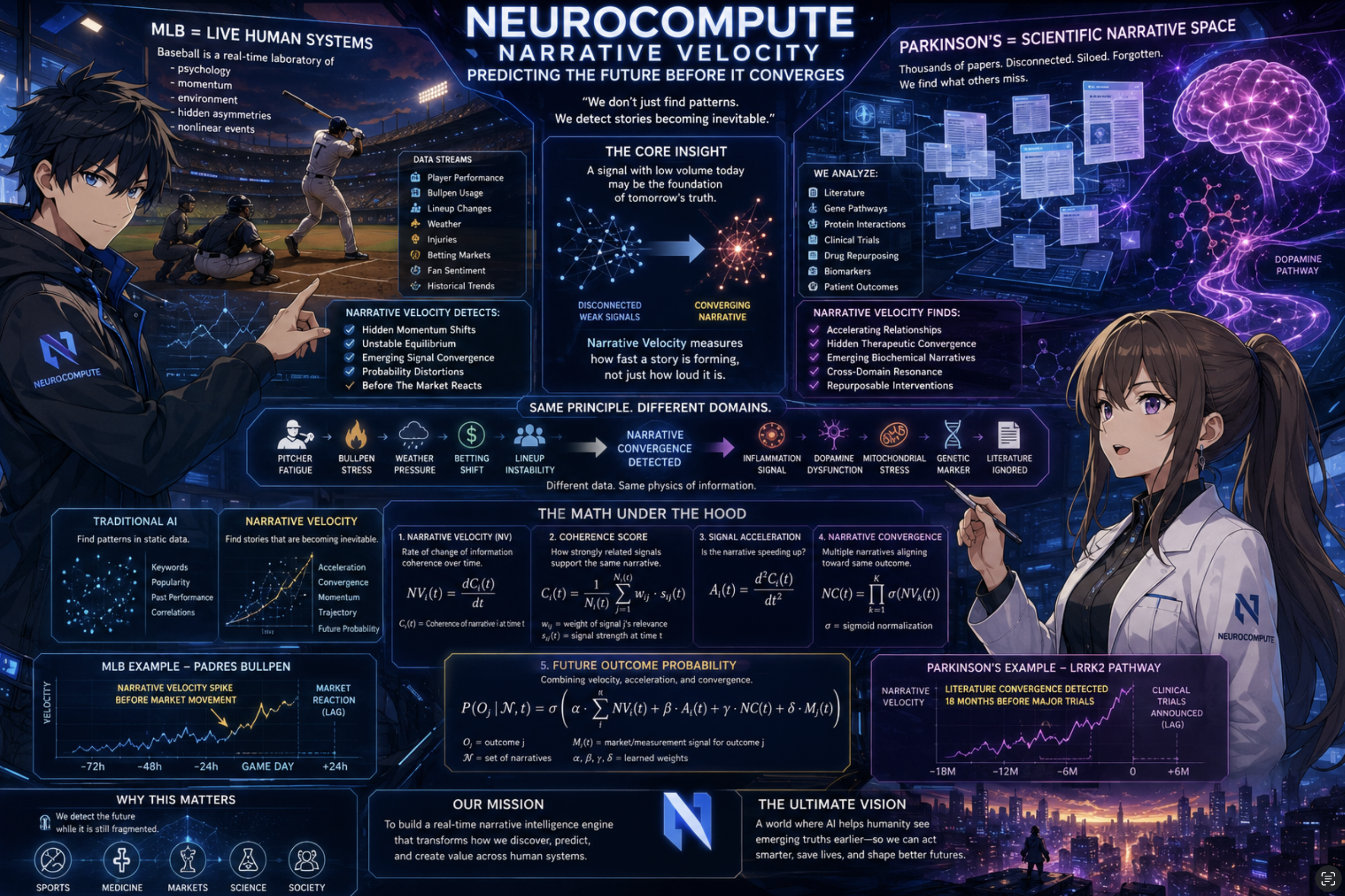
Neurocompute Parkinson’s Narrative Velocity Infographic
NEUROCOMPUTE VISUAL SYSTEM

Open the Narrative Velocity Map

Explore the full Parkinson’s research intelligence diagram.

Expand Intelligence View →
Full Neurocompute Infographic