1
Foldamers rescue synucleinopathy phenotypes in multiple in vitro and in vivo models.
88.0
AI
C grade · PMID 41920967
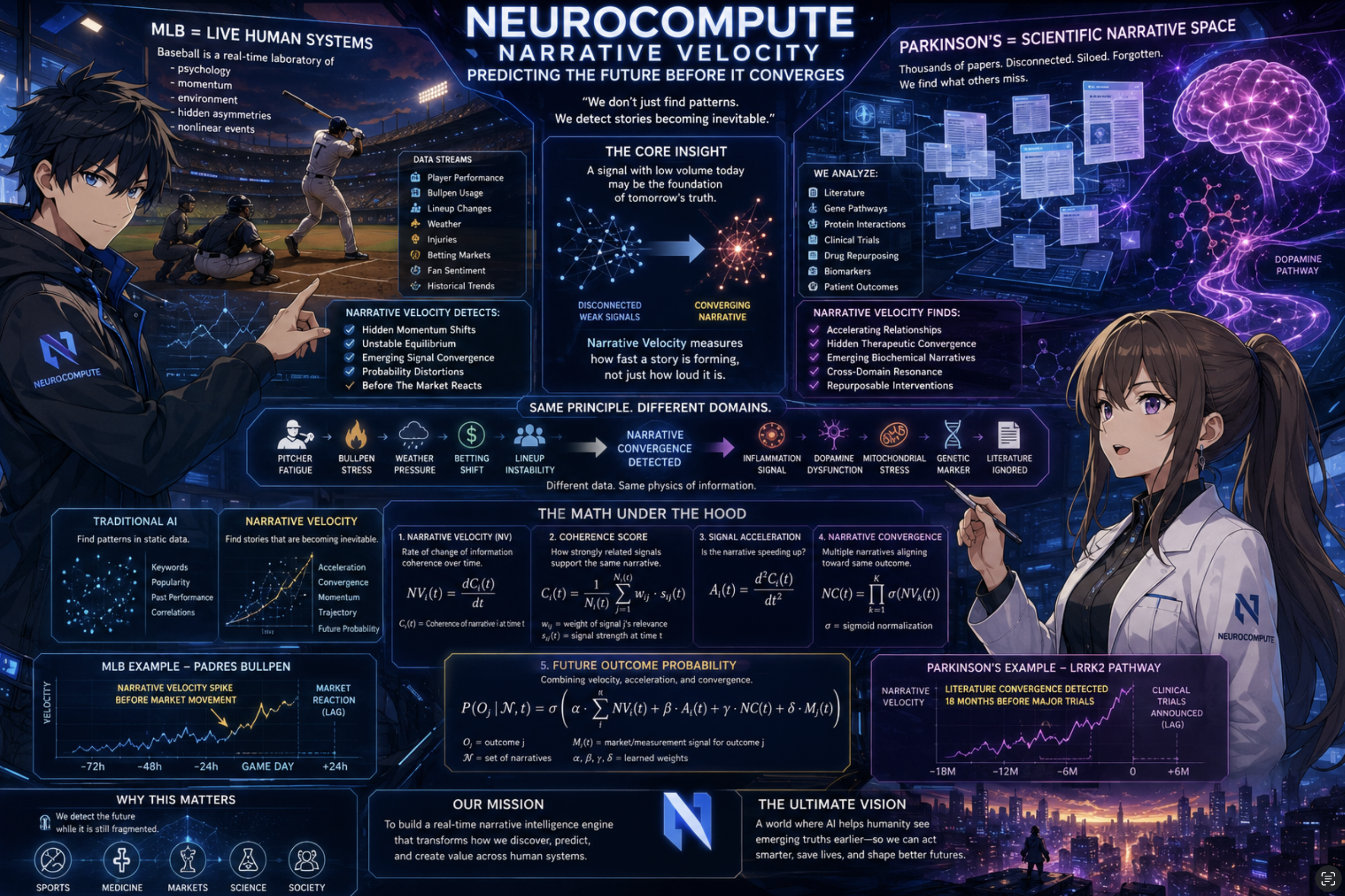
View analysis →Neurocompute scores biomedical literature, surfaces overlooked patterns, and turns Parkinson’s research into a living discovery terminal.
C grade · PMID 41920967
View analysis →C grade · PMID 41904011
View analysis →C grade · PMID 41968973
View analysis →C grade · PMID 41997210
View analysis →C grade · PMID 42037680
View analysis →C grade · PMID 41948061
View analysis →C grade · PMID 42020790
View analysis →C grade · PMID 41937092
View analysis →C grade · PMID 41904982
View analysis →C grade · PMID 42046441
View analysis →The paper presents SK-129, an oligoquinoline foldamer that preferentially binds neurotoxic α-synuclein oligomers, blocks α-synuclein (and α-synuclein–tau) aggregation and prion‑like spread, crosses the blood–brain barrier, and rescues pathology and survival across cellular, C. elegans, iPSC-derived…
Provides a drug-like, BBB‑permeable molecule with demonstrated target engagement, in vivo efficacy, and activity against patient-derived seeding material—making it a strong, actionable preclinical candidate for Parkinson’s disease and related synucleinopathies.
This review synthesizes evidence that cytoskeletal disruption (microtubules, actin, tau, neurofilaments, and α-synuclein) is a shared driver of neurodegeneration and surveys therapeutic approaches—cytoskeletal stabilizers, enhanced clearance, gene therapy/CRISPR, and nanodelivery—along with…
By highlighting actin and α-synuclein-linked cytoskeletal dysfunction and mapping translational strategies and biomarker needs, the chapter identifies actionable pathways and modalities that could be prioritized for Parkinson's drug discovery and combination therapies.
Comprehensive review linking iron-driven lipid peroxidation, ferroptosis, and α-synuclein pathology as convergent mechanisms of dopaminergic neuron loss in Parkinson’s disease and summarizing preclinical evidence that pharmacological inhibition of ferroptosis is neuroprotective.
Identifies actionable therapeutic targets (iron dyshomeostasis, lipid peroxidation, ferroptosis pathways) and translational strategies and biomarkers that could guide drug repurposing and development of neuroprotective treatments for PD.
The paper reports an Angiopep-2–decorated exosome–liposome hybrid that targets LRP-1, exhibits greater stability than exosomes alone, shows LRP-1–dependent uptake and lysosomal evasion in vitro, and crosses the barrier in zebrafish embryos.
This represents a potentially useful BBB-targeting delivery platform for Parkinson's therapeutics, but its direct PD relevance is limited by absence of PD-specific cargo, mechanistic disease models, or mammalian in vivo efficacy data.
This review proposes that combined vitamin D3 and vitamin A therapy could synergistically activate the VDR-RXR heterodimer to upregulate neuroprotective genes and reduce inflammation/oxidative stress, and calls for molecular-to-clinical validation.
Offers a repurposing-friendly, mechanistically plausible hypothesis linking VDR-RXR signaling to neuronal resilience that could direct preclinical PD studies and biomarker development, but is limited by being a speculative review with little PD-specific in vivo or clinical evidence.
Review argues that physiological or mildly elevated bilirubin can protect nigrostriatal dopaminergic neurons via antioxidant, anti-inflammatory and anti-ferroptotic actions and by modulating developmental pathways (Nrf2, microglial M2 polarization, Wnt/β-catenin, Shh).
Connects bilirubin to multiple PD-relevant, potentially druggable mechanisms (mitochondrial protection, Nrf2 activation, ferroptosis inhibition, immune modulation) that justify translational work on bilirubin-based therapies or mimetics despite current lack of direct interventional data.
This review compiles evidence that the TRPM2 Ca2+ channel modulates microglial activation and neuroinflammation across neurological models including Parkinson's disease, and that genetic or pharmacologic TRPM2 inhibition can reduce neuronal loss and glial reactivity though most studies use…
TRPM2 is a druggable ion channel linking oxidative stress to microglial inflammation, making it a promising translational target for dampening neuroinflammation in Parkinson's disease provided selective inhibitors and cell-specific validation are developed.
Comprehensive review of endocannabinoid system dysregulation and cannabinoid ligands as anti-inflammatory and neuroprotective strategies across neurodegenerative diseases, outlining receptor-selective modulators, enzyme inhibitors, and novel ligand designs while emphasizing heterogeneous findings…
Useful for Parkinson's drug discovery because it integrates mechanistic links between ECS, neuroinflammation and glial/synaptic dysfunction and highlights actionable pharmacological approaches (selective receptors, allosteric/dualsteric ligands, enzyme targets) that can guide target prioritization…
Review synthesizing evidence that PD involves not only dopaminergic loss but widespread dysregulation of noradrenergic, serotonergic, cholinergic, glutamatergic and GABAergic systems interlinked with alpha-synuclein aggregation, mitochondrial dysfunction, oxidative stress, and neuroinflammation,…
By integrating neurotransmitter-level mechanisms with core PD pathologies, the paper highlights multiple targetable pathways and repurposing opportunities that could guide development of multi-modal, disease-modifying therapies despite being a non-original, literature-review–style resource.
Glimepiride treatment in collagenase-induced ICH mice improved neurological function and reduced edema, hematoma volume, BBB leakage, neuroinflammation, and neuronal apoptosis via modulation of tight junction proteins, MMP-9, inflammatory markers, and apoptosis regulators.
As an approved antidiabetic with reported neuroprotective effects, glimepiride's ability to preserve BBB integrity and dampen inflammation points to repurposing opportunities targeting mechanisms (BBB disruption, inflammation, cell death) that are relevant to Parkinson's disease neuroprotection,…
This review synthesizes evidence that acupuncture may ameliorate Parkinson's disease by modulating multiple programmed cell death pathways (autophagy, apoptosis, pyroptosis, necroptosis, ferroptosis) and their intersections with neuroinflammation, mitochondrial dysfunction, oxidative stress, and…
While primarily a non-pharmacological and literature-review paper with limited direct drug-development data, it highlights actionable PCD-related pathways and molecular nodes that could inform target selection, biomarker hypotheses, or adjunct therapeutic strategies in PD drug discovery.
A retrospective, propensity‑matched TriNetX cohort of 21,427 TBI patients on continuous statins versus matched nonusers reported higher 5‑year risks of vascular and non‑vascular dementia, stroke, depression, and Parkinson's disease (PD HR 1.63; 95% CI 1.34–1.98).
For Parkinson's drug discovery this real‑world signal argues against statin repurposing for post‑TBI neuroprotection, but its observational design and potential confounding limit mechanistic insight and point to the need for prospective, mechanism‑focused studies to guide targeted therapies.
This review synthesizes evidence that hierarchical lysosomal repair pathways—ESCRT-mediated membrane resealing, lipid-centered recovery, lysophagy, and TFEB-driven lysosomal renewal—are central to neuronal resilience and are impaired in Parkinson's and other neurodegenerative diseases.
By mapping specific, druggable nodes (ESCRT machinery, lipid transport/repair modules, lysophagy regulators, and TFEB transcriptional control) the paper highlights actionable targets and biomarker opportunities for therapies aimed at restoring lysosomal integrity to prevent neuronal loss in…
This review argues that lactate-driven protein lactylation links metabolism to epigenetic regulation in the brain, influencing synaptic plasticity and neuroinflammation and implicating the lactate–lactylation axis in Parkinson's disease pathophysiology.
Highlights lactylation as a novel, potentially drug‑targetable mechanism and source of biomarkers that ties metabolic dysfunction to neuroinflammation in PD, offering a promising but still early-stage avenue for therapeutic and diagnostic development.
Pilot multicenter randomized trial (n=80) comparing Mediterranean diet, structured physical activity, their combination, and standard care in people with Parkinson’s disease to assess intervention effects on the gut microbiome (16S vs third-generation sequencing) and associations with clinical…
By testing a scalable, non-pharmacological combined lifestyle intervention and linking microbiome alterations to clinical outcomes and stage-specific biomarkers, the study could reveal modifiable gut–brain pathways and non-invasive markers useful for stratifying patients and guiding future…
This review evaluates antisense oligonucleotides targeting α-synuclein for Parkinson's disease and the potential of focused ultrasound–mediated blood–brain barrier opening to noninvasively deliver ASOs to deep brain regions, summarizing current data, gaps, and translational challenges.
It highlights a high-translational strategy—combining mechanism-directed ASOs with clinically advancing FUS delivery—to address a major barrier to CNS therapeutics and accelerate development of disease-modifying treatments for PD.
Narrative review synthesizing molecular (clock genes, melatonin), neuropathological (SCN involvement, α-synuclein), animal and clinical evidence that circadian disruption contributes to motor and non-motor symptoms in Parkinson’s disease and summarizing interventions such as bright light therapy,…
Connects mechanistic circadian pathways to clinically actionable, low-risk interventions (light, melatonin, chronotherapy) and thereby highlights tractable targets and repurposing opportunities to improve sleep, nocturnal symptoms, and quality of life in PD, guiding translational and clinical trial…
Systematic review of cardiovascular safety across Parkinson's treatments reporting that levodopa, ergot-derived dopamine agonists, entacapone, and selegiline are associated with cardiotoxic effects (orthostatic hypotension, arrhythmias, valvular abnormalities) while safinamide, non-ergot agonists,…
Offers clinically actionable safety information to guide drug selection, monitoring, and trial design in PD therapeutic development and patient stratification, though it provides limited mechanistic or disease-modifying insights for discovery research.
This review compiles evidence that Pink1-mediated mitophagy is suppressed by aging and high-fat diet but enhanced by exercise, linking these effects to dopaminergic neuron loss, α-synuclein aggregation, oxidative stress, and insulin resistance in Parkinson's disease.
It highlights a mechanistically clear, actionable axis (Pink1/Parkin, PGC-1α, BDNF, inflammation) amenable to lifestyle interventions, biomarker pursuit, and mitochondria-targeted therapeutic strategies, offering translational opportunities despite being a review.
This MRI study finds reduced glymphatic function (lower DTI-ALPS index) in both premanifest and manifest SCA3 patients that correlates with greater disability, longer disease duration (emerging after ~3 years), cortical and subcortical atrophy, and white-matter microstructural loss.
Though in SCA3, the observation that early glymphatic impairment links to protein-aggregation–related neurodegeneration supports targeting or monitoring glymphatic clearance as a translational biomarker/therapeutic axis potentially relevant to Parkinson's and other synucleinopathies.