1
Alzheimer's disease: disrupted communication between the endoplasmic reticulum and mitochondria.
72.0
AI
C grade · PMID 42010082
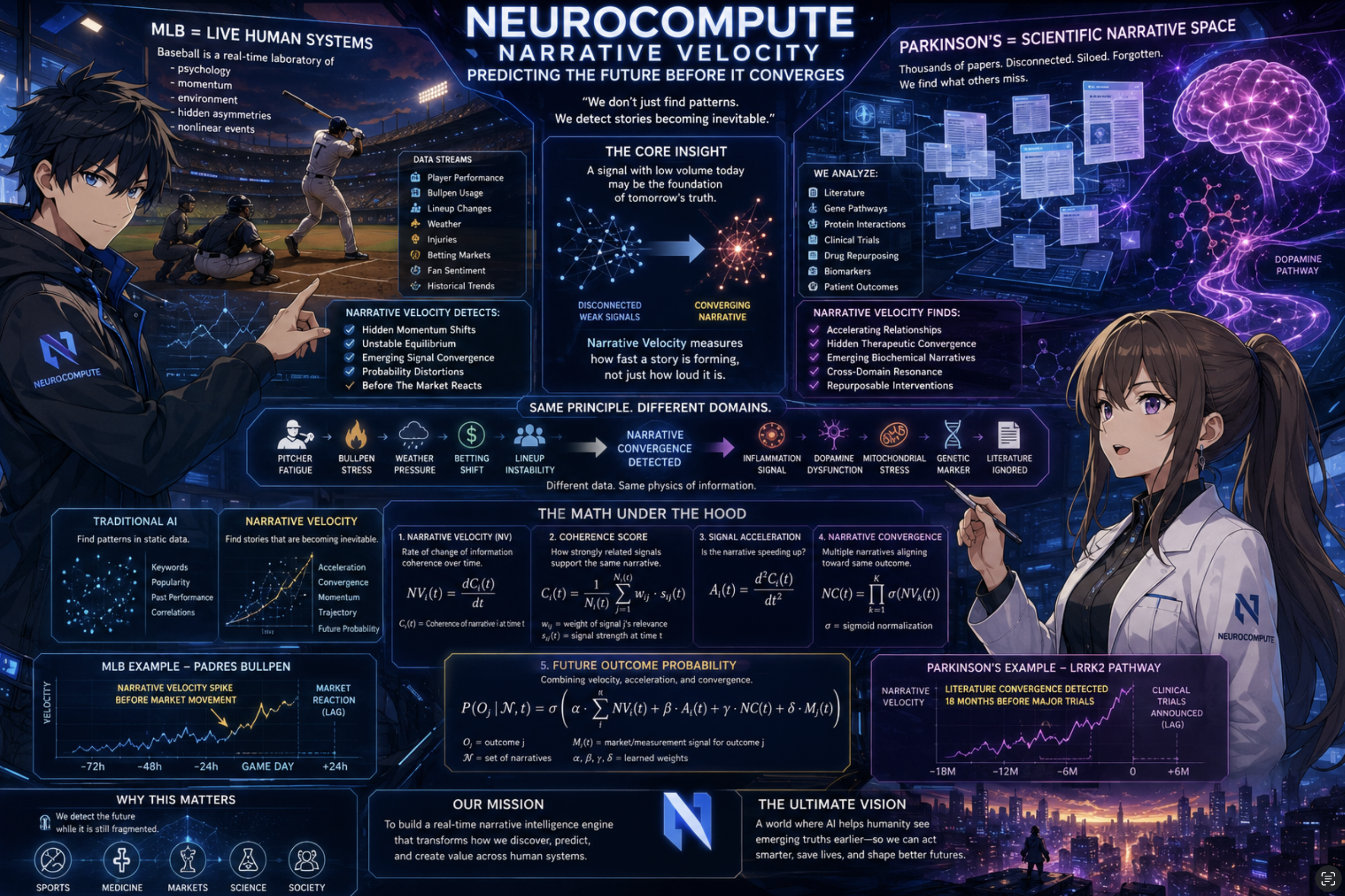
View analysis →Neurocompute scores biomedical literature, surfaces overlooked patterns, and turns Parkinson’s research into a living discovery terminal.
C grade · PMID 42010082
View analysis →C grade · PMID 41993512
View analysis →C grade · PMID 41956243
View analysis →C grade · PMID 41920885
View analysis →C grade · PMID 41914244
View analysis →C grade · PMID 42033189
View analysis →C grade · PMID 41933141
View analysis →C grade · PMID 41942585
View analysis →C grade · PMID 41900050
View analysis →C grade · PMID 41972110
View analysis →This review synthesizes evidence that disrupted endoplasmic reticulum–mitochondria contact sites (ERMCs/MAMs) alter Ca2+ homeostasis, lipid transfer, mitochondrial dynamics and ER stress to drive Alzheimer’s pathology including Aβ production and mitochondrial dysfunction.
Although AD-focused, the paper highlights mechanistic nodes (ER–mitochondria Ca2+ signaling, mitochondrial integrity, lipid metabolism, ER stress) that are shared with Parkinson’s disease and therefore point to actionable targets and biomarkers relevant for PD therapeutic discovery.
This study demonstrates that WDR44 drives de novo α-synuclein aggregation at the lysosomal membrane, with WDR44 knockdown reducing aggregation and neuronal dysfunction in vitro and in vivo while WDR44 accumulates in PD patient Lewy bodies.
Provides a mechanistically actionable target (WDR44–α-synuclein interaction) supported by in vivo and patient-derived data, enabling therapeutic strategies to block early aggregation and downstream lysosomal dysfunction in Parkinson's disease.
In an MPTP mouse model, the natural compound muscone improved motor and non-motor Parkinsonian outcomes and rescued dopaminergic neurons by directly binding FKBP5 to activate AKT–FoxO3 signaling, thereby promoting oligodendrocyte progenitor survival, differentiation, and remyelination.
This work nominates a druggable target (FKBP5) and a repurposable compound that mechanistically drive remyelination as a novel neuroprotective strategy for PD with strong preclinical validation, offering translational leads despite being limited to toxin-based models and lacking human or…
High-density EEG with source localization reveals a frequency-specific increase in high beta (23–35 Hz)-gamma phase–amplitude coupling across the cortical motor network in Parkinson's disease that correlates with bradykinesia and rigidity (but not tremor) and is reduced by dopaminergic medication…
This identifies a symptom-linked, medication-responsive electrophysiological biomarker and a frequency- and region-specific target for tuning invasive or noninvasive neuromodulation (e.g., DBS or closed-loop stimulation), improving translational precision for PD circuit-based therapies.
Early and prolonged cortical electrical stimulation in MitoPark mice improved locomotion, gait and beam-walking performance and preserved nigrostriatal dopaminergic neurons and fibers as measured by tyrosine hydroxylase immunohistochemistry.
Provides preclinical, mitochondria-relevant evidence that a translational neuromodulation approach can deliver functional benefit and dopaminergic neuroprotection in a genetic PD model, supporting further mechanistic studies and clinical translation of CES as an adjunct therapy.
In a BSSG-induced rat α-synucleinopathy model, prophylactic plus twice-weekly postinduction pioglitazone was well tolerated and most effectively reduced α-synuclein aggregates, preserved SNpc dopaminergic phenotype, and attenuated behavioural deficits.
Provides actionable preclinical evidence for repurposing the PPARγ agonist pioglitazone as a schedule-dependent, potentially disease-modifying therapy for PD by linking a specific dosing regimen to aggregate reduction and neuroprotection, justifying further mechanistic and translational studies.
Dietary administration of the marine bacterium Stutzerimonas stutzeri protects against dopaminergic neuron loss, reduces α-synuclein levels, and improves motor and sensory phenotypes in C. elegans PD models via suppression of ferroptosis (restoring iron homeostasis, lowering lipid peroxidation, and…
Provides a mechanistically actionable lead—ferroptosis modulation by a marine-derived microbe—with biomarker readouts and clear neuroprotective effects in vivo, offering a promising source of bioactive compounds for PD drug discovery that warrants validation in mammalian models.
This in vitro study shows an ethyl acetate licorice fruit extract—high in the flavonoid glabridin—protects PC12 cells from H2O2-induced oxidative damage by reducing ROS, restoring mitochondrial membrane potential, and lowering caspase-3 activity.
By demonstrating mitochondrial and anti-apoptotic effects tied to a defined compound (glabridin), the work points to a tractable antioxidant lead with mechanistic relevance to Parkinson's-related oxidative stress that warrants isolation, target validation, and in vivo testing.
In a 6-OHDA rat model, intranasal silica nanoparticles loaded with Tradescantia spathacea phenolic extract (SiO2-TS) improved motor and anxiety-like behaviors and preserved dopaminergic neurons while reducing astrogliosis.
Provides a potentially translatable neuroprotective approach combining intranasal nanoparticle delivery and plant-derived phenolics that reduces neuroinflammation and dopaminergic loss in a PD model, meriting further mechanistic, pharmacokinetic, and alpha-synuclein–relevant validation.
Narrative review synthesizing animal and limited human evidence that exercise mitigates dopaminergic neuron apoptosis in PD by modulating mitochondrial (AMPK/Sirt1/PGC-1α), neuroinflammatory (TLR/MyD88/NF-κB), and autophagy (CaMKII/Beclin1/p62) pathways.
Identifies actionable molecular pathways linking exercise to neuroprotection—useful for designing nonpharmacologic interventions, biomarker-driven trials, or adjunctive therapeutic strategies—while flagging translational gaps due to limited human data and homogeneous exercise models.
This review synthesizes evidence that the serine protease HTRA1 regulates brain proteostasis, ECM remodeling, and signaling (TGF-β, Wnt, Notch), has both protective and pathogenic roles, interacts with ApoE and tau, and presents biomarker and therapeutic targeting opportunities, with relevance…
HTRA1 influences proteostasis, inflammation, and vascular/ECM integrity—mechanisms relevant to Parkinson’s pathobiology and drug targeting—so the review highlights a moderately actionable target space (including inhibitors and biomarkers), but it lacks direct, PD-specific links to core processes…
In a retrospective cross-sectional analysis of 184 PD patients (44 with STN-DBS), levodopa administration—independent of DBS status—was associated with increased motor asymmetry and higher axial-to-appendicular ratios, with a larger AAR change observed in the STN-DBS cohort.
The study has moderate translational value because it informs clinical trial endpoint selection and patient stratification by showing that dopaminergic therapy can reshape motor phenotype, but it offers limited mechanistic targets or direct therapeutic leads for drug discovery.
Retrospective single-center study of 132 Parkinson's patients treated up to 13 years with an amantadine + MAO-B inhibitor + dopamine agonist regimen (with low‑dose levodopa only if needed) reported a modest early UPDRS III improvement, persistently low rates of dyskinesia and OFF periods, and…
Clinically relevant, immediately actionable combination therapy using repurposed agents suggests a potential strategy to reduce levodopa exposure and limit dyskinesia, but the nonrandomized retrospective design means randomized controlled trials are required to validate efficacy and safety.
This review argues that combining 3D bioprinted scaffolds with neural stem cell therapy can address key barriers to CNS regeneration by detailing bioink/scaffold design, biophysical and biochemical cues, and summarizing 53 preclinical and 18 early clinical studies across spinal cord injury, stroke,…
By synthesizing scaffold engineering, vascularization, immune compatibility, and GMP manufacturing challenges, the paper highlights practical strategies that could improve stem-cell survival, integration, and translational readiness for Parkinson’s cell-replacement and disease-modeling applications.
This perspective summarizes prevalence, diagnostic challenges, putative neurobiology (dopaminergic, serotonergic, noradrenergic systems and HPA axis), validated assessment tools, standard pharmacologic and psychotherapeutic treatments, and emerging methods (DBS, neuroimaging, ecological momentary…
Clinically useful for improving identification and symptomatic management of depression in PD and for informing research on affective circuitry and neuromodulation, but offers limited direct insight into molecular disease-modifying targets for Parkinson's therapeutic discovery.
This review summarizes GPX4's central role in ferroptosis—covering glutathione metabolism, lipid peroxidation, and iron homeostasis—and surveys emerging pharmacological modulators with relevance to neurodegenerative diseases including Parkinson's.
By linking GPX4 dysfunction to iron-dependent lipid peroxidation and cataloguing modulators, the paper highlights a tractable ferroptosis axis (oxidative/iron biology and glutathione metabolism) that could be exploited for Parkinson's drug discovery and repurposing efforts.
This critical review summarizes the high prevalence, epidemiology, proposed mechanisms (iron deficiency, dopaminergic dysregulation, sympathetic overactivity), and current non-pharmacological and pharmacological management strategies (including dopamine agonists) for periodic limb movements in…
By consolidating mechanistic hypotheses and treatment approaches—especially iron-related pathways and dopaminergic therapies—the paper highlights actionable targets and clinical strategies that could be pursued in translational studies to improve sleep and quality of life in PD patients.
A review that links gut microbiota dysbiosis to Parkinson's pathophysiology and synthesizes microbiome-targeted therapeutic strategies—fecal microbiota transplantation, dietary interventions, and probiotics—aimed at modulating the gut-brain axis.
It highlights the gut-brain axis as a translationally relevant target and compiles potential microbiome-based interventions that can be prioritized for preclinical validation and clinical trials in PD.
Conditional deletion of D2 receptors from indirect-pathway striatal neurons in mouse models halved L-DOPA–induced abnormal involuntary movements and abolished D2-agonist–induced dyskinesia/dystonia while preventing recruitment of parvalbumin-positive GPe neurons.
Provides causal, cell-type–specific evidence that indirect-pathway D2 receptors and their downstream GPe PV neuron activation drive L-DOPA-induced dyskinesia, pointing to targeted circuit- or cell-specific interventions (gene therapy, circuit modulators, or downstream signaling blockers) to reduce…
This review summarizes advances in biomimetic cell membrane-coated nanocarriers (from RBCs, platelets, immune, stem, and cancer cells) to improve BBB penetration, immune evasion, and targeted CNS delivery with applications including Parkinson's disease while highlighting challenges in…
Provides a translationally relevant strategy to overcome blood–brain barrier delivery hurdles for Parkinson's therapeutics—potentially enabling more effective brain delivery of existing or new drugs even though it does not propose specific PD-targeted mechanisms or candidate therapeutics.